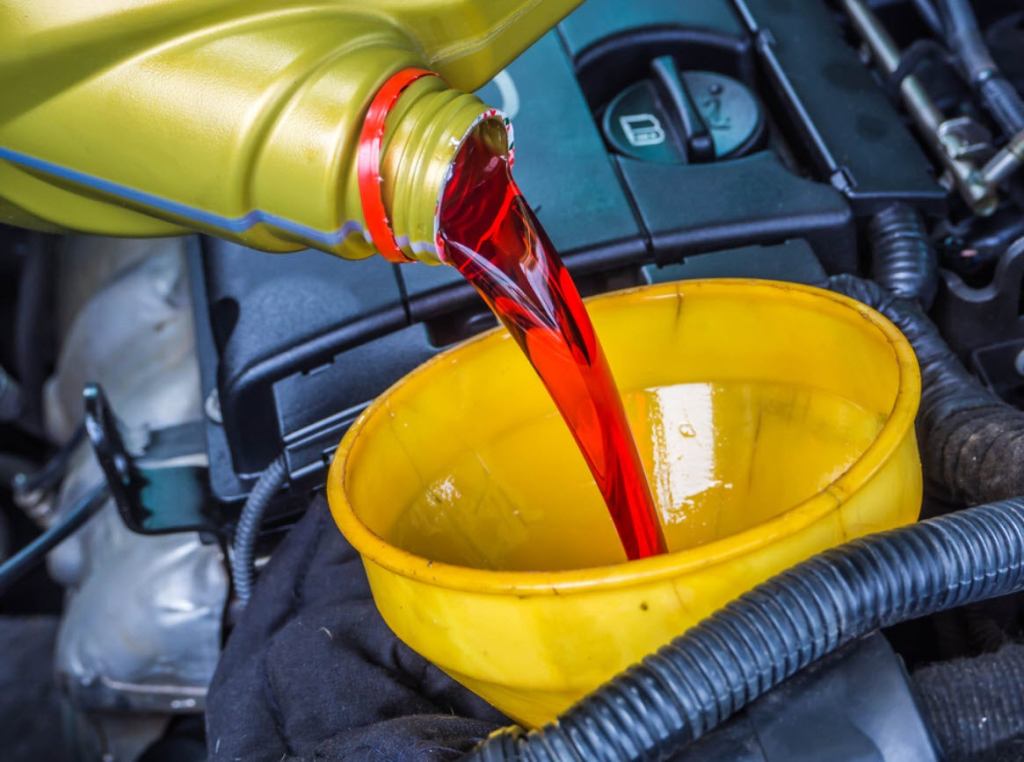
Oil and Oil Filter
Your engine oil and oil filter need to be changed regularly, because as an engine runs, tiny bits of metal, dirt, and carbon end up in the oil and can cause excessive wear on the engine. The non-synthetic oil that was traditionally used in the past always had a 3,000-mile rule of thumb, but most cars today run on synthetic, which can safely last between 5,000 and 10,000 miles between oil changes, depending on the type. Remember to check the engine’s oil level on a regular basis, too. Once every two weeks and before any long road trips should suffice.
Transmission Fluid
Low transmission-fluid levels will cause shifting problems and can burn up the transmission. It is important to monitor your transmission fluid regularly, rather than adhere to a specific mileage marker. Healthy fluid will be pink and smell sweet, while bad transmission fluid will be darker red, or even brown, and smell burnt. Many cars will keep a transmission-fluid dipstick toward the back of the engine bay (the windshield side). However, some cars don’t have a dipstick for transmission fluid at all, and low or contaminated fluid will instead light a warning light on the dashboard—often the “check engine” light.
Generally, if you have a manual transmission, plan to change the transmission fluid between 30,000 and 60,000 miles. That said, a vehicle under heavy strain (like a truck used to tow a boat or trailer) should have its manual transmission fluid changed at more frequent intervals.
Likewise, automatic transmission fluid has a lifespan ranging from 30,000 to well over 100,000 miles. Consult your vehicle’s manual before bringing an automatic to your mechanic.
Coolant
A mix of water and antifreeze flows through your car engine’s radiator to keep it at the correct temperature. If you lose too much coolant, the engine will overheat, which can cause severe damage. Plan to replace your coolant at 60,000 miles, and make sure your mechanic flushes the entire cooling system while they’re at it.
Brake Fluid
Your brakes are engaged through a hydraulic system. But when the fluid in that system is contaminated by water, its boiling point is lowered, and it can turn to gas—which is compressible. This leads to a “squishy” brake pedal. To ensure that your brakes work as advertised, bleed your brake system of its fluid and replace with new brake fluid according to your vehicle’s manual. Most manufacturers recommend doing this every 20,000 to 45,000 miles.
Power Steering Fluid
Low power steering fluid will cause heavy steering or excessive noise while turning the wheel. Plan to flush and replace your power steering fluid around 75,000 miles, or when problems arise.
 T1K DIAGNOSTIC & REPAIR